SEPTEMBER 26, 2026 · JAMES HAHN
- AI
- SIDE PROJECTS
I Put an AI on a Thumb Drive
An 8-billion-parameter model that runs from a USB stick with no internet, no account, and no GPU. What it took, what it gets wrong, and why fully local AI matters to anyone guarding sensitive company data.
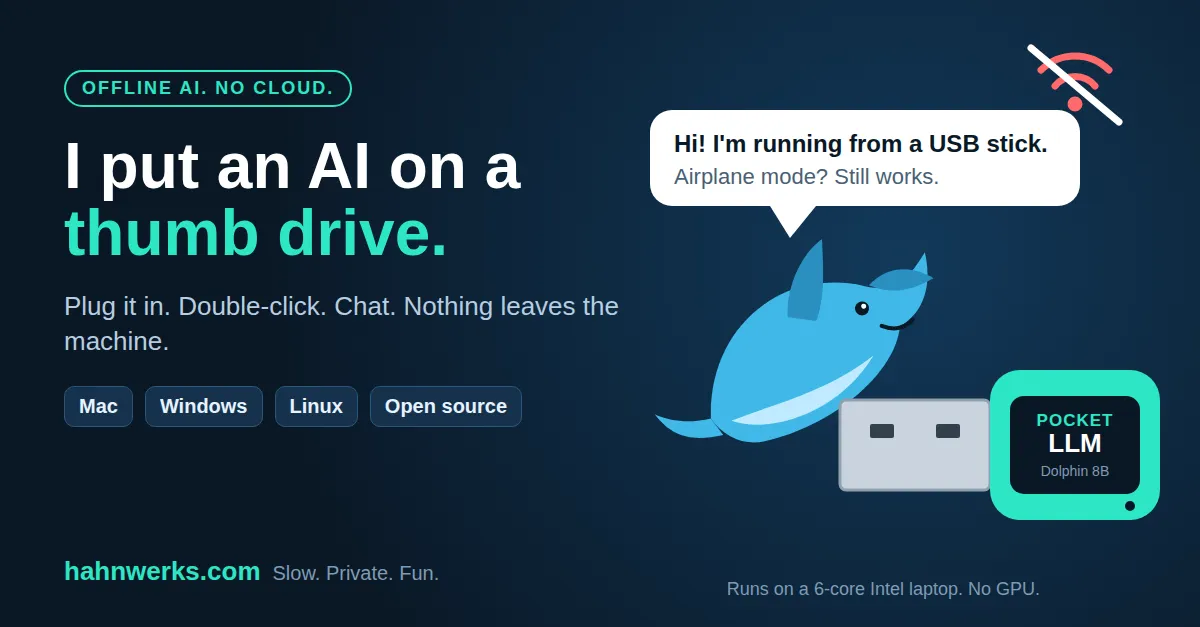
Plug it in, double-click, and you're chatting with an 8-billion-parameter AI model on Mac, Windows, or Linux. No internet. No account. No subscription. Nothing you type ever leaves the machine.
I call it Pocket LLM, and it took about an hour to put together, test, and mess around with.
What it actually is
Three pieces, all on one thumb drive:
- The runtime: Mozilla's open-source llamafile, a single program that runs the model and serves a chat page in your browser.
- The model: Dolphin 2.9.4, built on Meta's Llama 3.1 8B, compressed to about 4.9 GB so it fits on a drive and runs on an everyday laptop.
- The launchers: my one-click start and stop scripts for Mac, Windows, and Linux. They wait for the model to load, open the chat, and shut everything down cleanly.
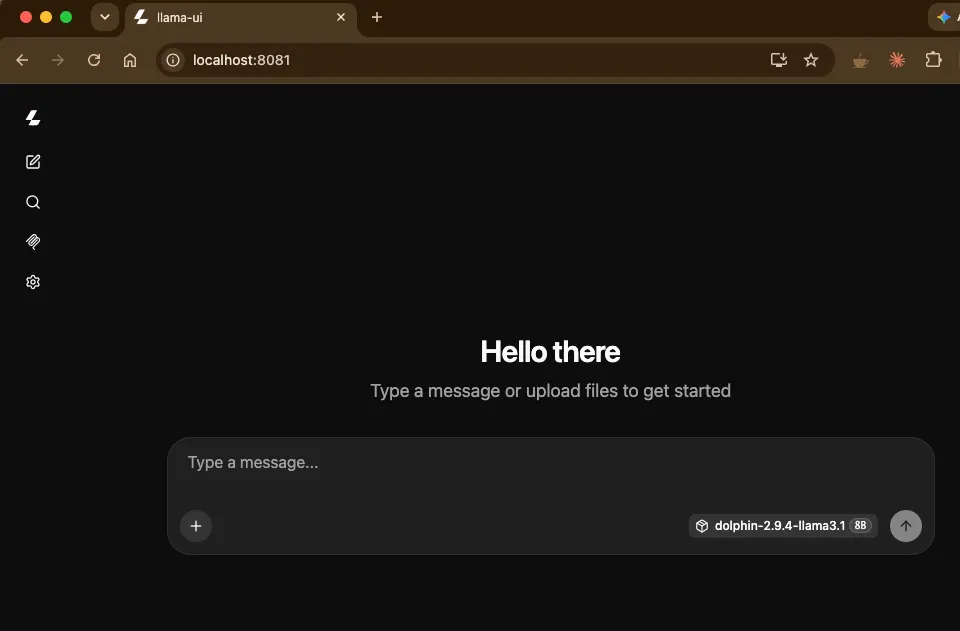
The specs are humble
A 6-core Intel laptop, 16 GB of RAM, no GPU. It's slow: about five tokens a second, which works out to a few words at a time. I've had faster conversations with a fax machine. But it works, even in airplane mode.
Naturally, the first thing I asked it was to explain my own job.
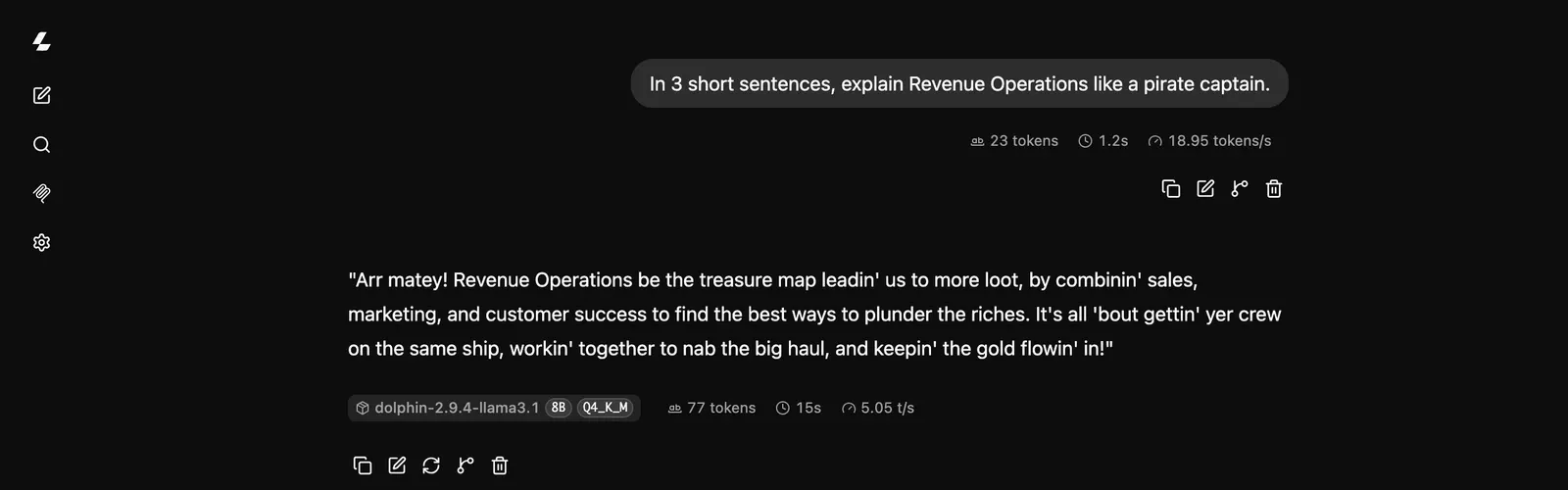
"Arr matey! Revenue Operations be the treasure map leadin' us to more loot... It's all 'bout gettin' yer crew on the same ship." I've been saying that for 15 years, just with fewer "arr"s.
It also gets things wrong
Asked about itself, it confidently told me Hugging Face built Llama. Meta did. It got the architecture wrong too, with total confidence.
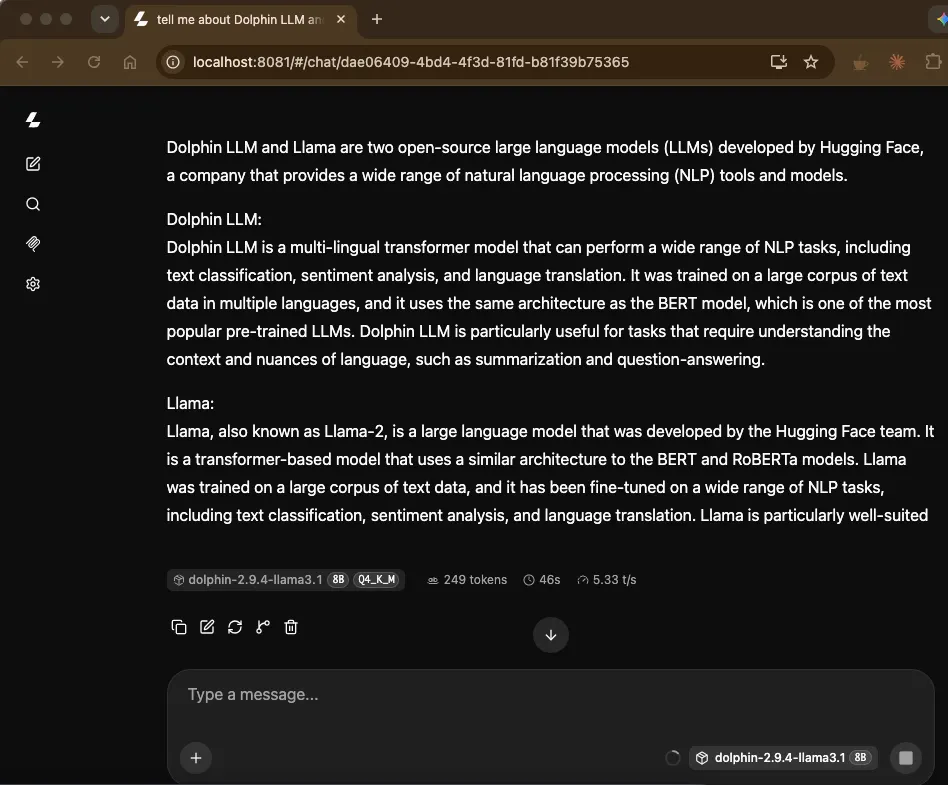
That's the trade-off with small local models. You get privacy and portability, and you give up some accuracy. Knowing where that line sits, and which work belongs on each side of it, is most of what good AI strategy is.
Why I bothered
I've spent my career in revenue operations, network security, and finance-adjacent work, where the data is the crown jewels: pipeline, pricing, comp plans, strategy, board numbers.
Every company wants the upside of AI without handing that data to a third party. I wanted to see what fully local looks like today, so I know what's coming as these models get faster and smaller. The honest answer: it's already good enough for drafts, notes, and brainstorming on sensitive material, and not yet good enough to trust on facts without checking.
Try it yourself
It's open source, so grab it and break it yourself. The project page has more screenshots and how it works, and the code and setup guide are on GitHub.
If your company had to keep AI fully inside its walls, what's the first thing you'd use it for? Tell me on LinkedIn.
LET'S TALK
Book a 30-min call.
Thirty minutes on the forecast, the CRM, and the handoff between sales and finance.
ABOUT THE AUTHOR
I'm James Hahn, a Revenue Operations executive. I build investor-ready revenue systems for high-growth companies, from the next funding round to the IPO, and I was part of the teams behind Zendesk's IPO, AppDynamics' $3.7B sale to Cisco, and Riskified's 2021 NYSE listing. I am available for full-time executive roles and advisory roles, plus select fractional and interim engagements.
More about me →